

In the construction industry, the selection of insulation materials has long prioritized thermal insulation performance, while sound insulation is often considered a secondary factor, or even completely ignored. However, in spaces near major traffic arteries, industrial plants, equipment rooms, or any area prone to noise, focusing on the acoustic properties of materials from the outset is crucial. Is there a product that can effectively block heat transfer while significantly reducing noise? The answer is yes—aluminum foil insulation cotton is becoming the preferred solution in the market that balances both thermal and sound insulation.
High-Density Aluminum Foil Sound Insulation Cotton
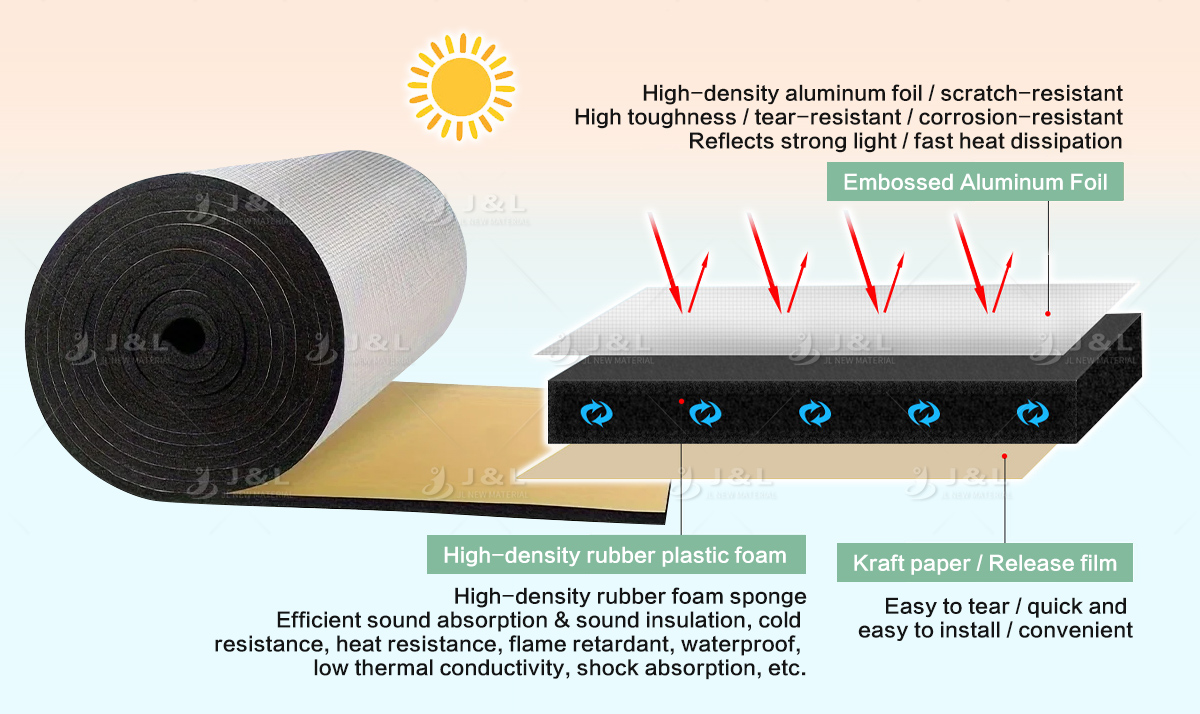
Taking the widely acclaimed high-density Aluminum Foil Sound Insulation Cotton as an example, it combines high-reflectivity aluminum foil with durable rubber-plastic foam to create a versatile and high-performance thermal insulation barrier. Its core features include:
High Density and High Strength: The rubber-plastic foam substrate has high density, good toughness, strong tear resistance, and is not easily damaged.
Closed-Cell Structure, Waterproof and Moisture-Proof: The closed-cell foaming process makes the material almost non-absorbent, maintaining stable performance even in high humidity environments.
Upgraded Fire Retardant (Class B): Self-extinguishing upon removal of flame, eliminating safety hazards and meeting building fire safety codes.
Aluminum Foil Layer, Scratch-Resistant and Corrosion-Resistant: Effectively isolates moisture, resists acids and alkalis, and extends service life.
Self-Adhesive Backing: During construction, simply peel off the release film for easy application; strong adhesion, not easy to peel off, and easily adheres to various substrates.
Imported Explosion-Proof Aluminum Foil: The surface is made of reinforced aluminum foil, which is waterproof, moisture-proof, and anti-aging, effectively reflecting sunlight’s ultraviolet rays for a long time.
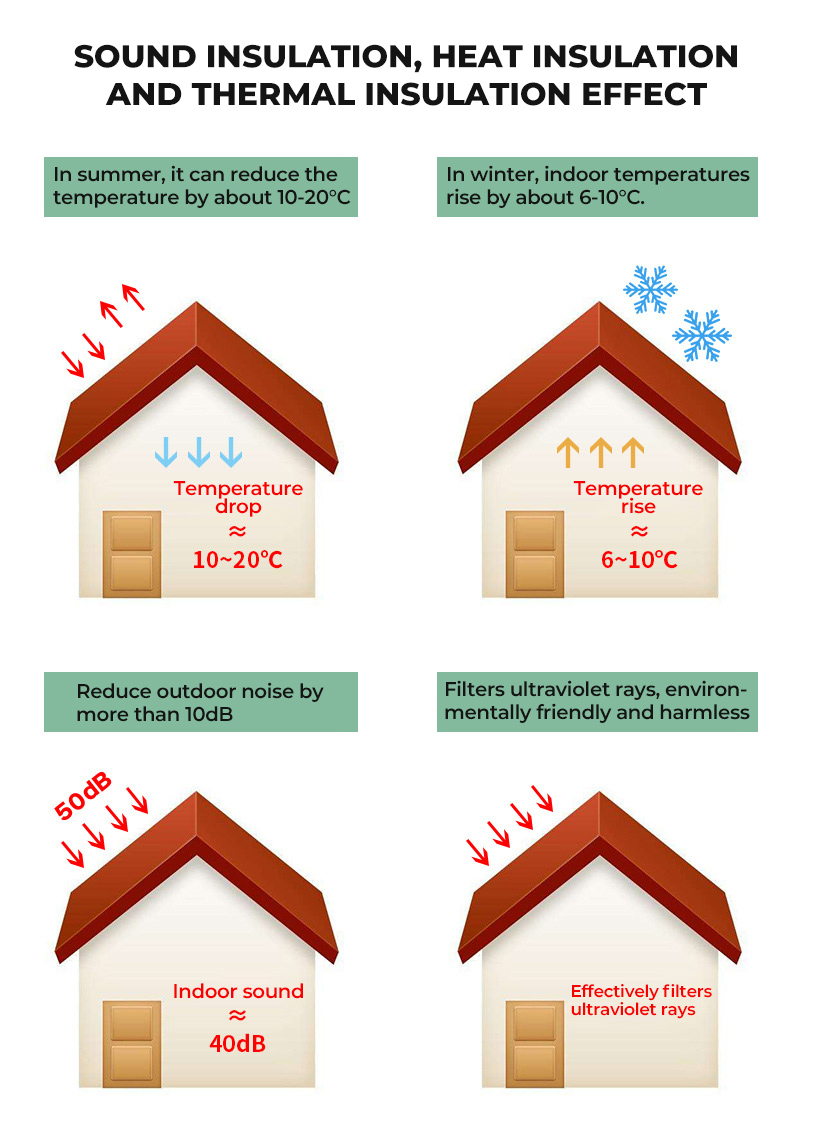
Thanks to these properties, this product can significantly reduce energy transfer, help maintain stable indoor temperature, and reduce heating and cooling costs. In terms of sound insulation, its dense structure and the reflective properties of the aluminum foil layer can effectively absorb and block sound waves, making it particularly suitable for suppressing high-frequency noise (such as the hissing of steam engines, compressors, fans, etc.)
Application Scenarios Are Extremely Wide
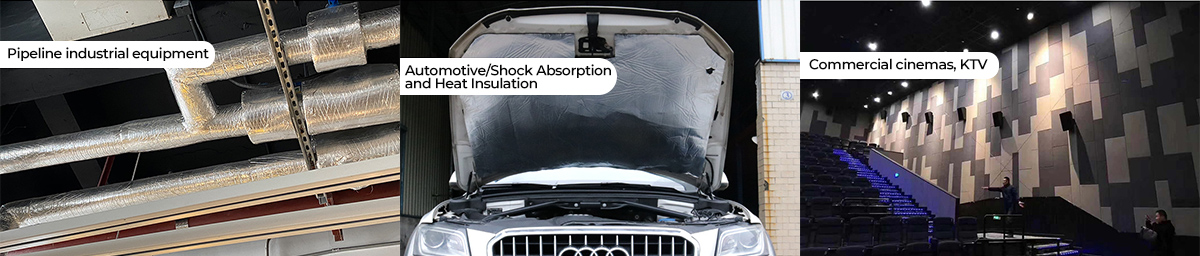
Aluminum foil insulation and soundproofing materials are not limited to building walls or roofs; they also excel in industrial and specialized fields. Typical applications include:
Building: Roof insulation, wall insulation and soundproofing, warehouse insulation, cold storage equipment, floor vibration damping and soundproofing.
Industry and Transportation: Noise absorption and reduction in engine compartments, engineering vehicles, ships, and machinery.
Everyday and Commercial: Insulated box linings, pipe wrapping, automotive insulation, container insulation.
Whether it’s a new project or a renovation of an existing building, whether it’s reducing footsteps from upstairs or isolating mechanical noise in equipment rooms, aluminum foil insulation and soundproofing materials can provide an integrated solution.
Construction Steps Reference: Walls and Floors
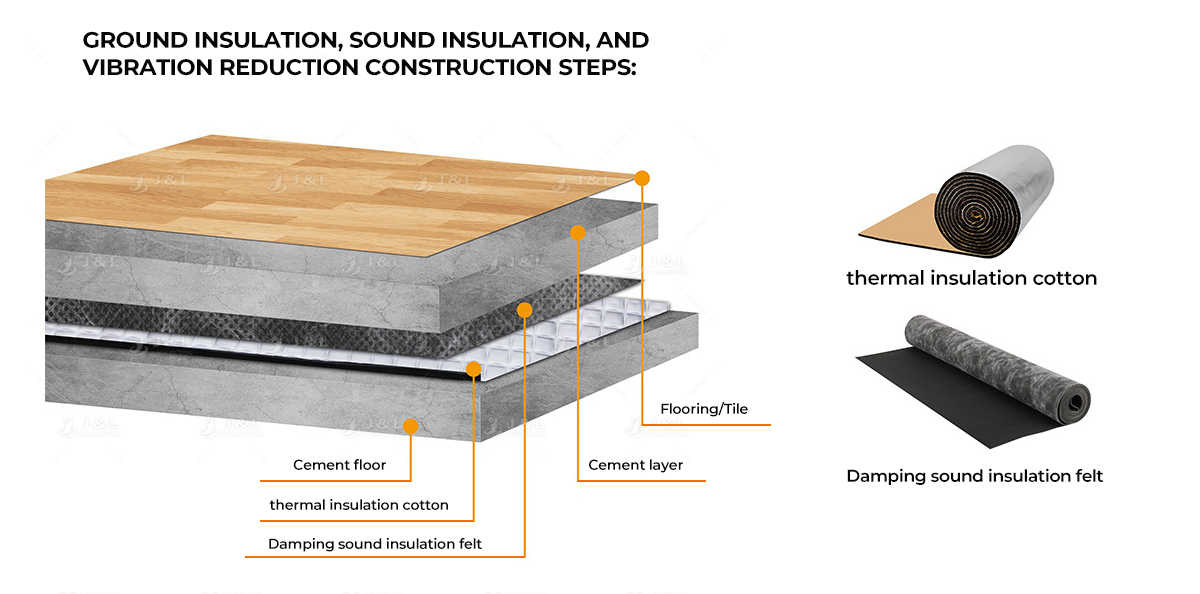
To help users understand how to use this material more intuitively, here are two typical construction procedures:
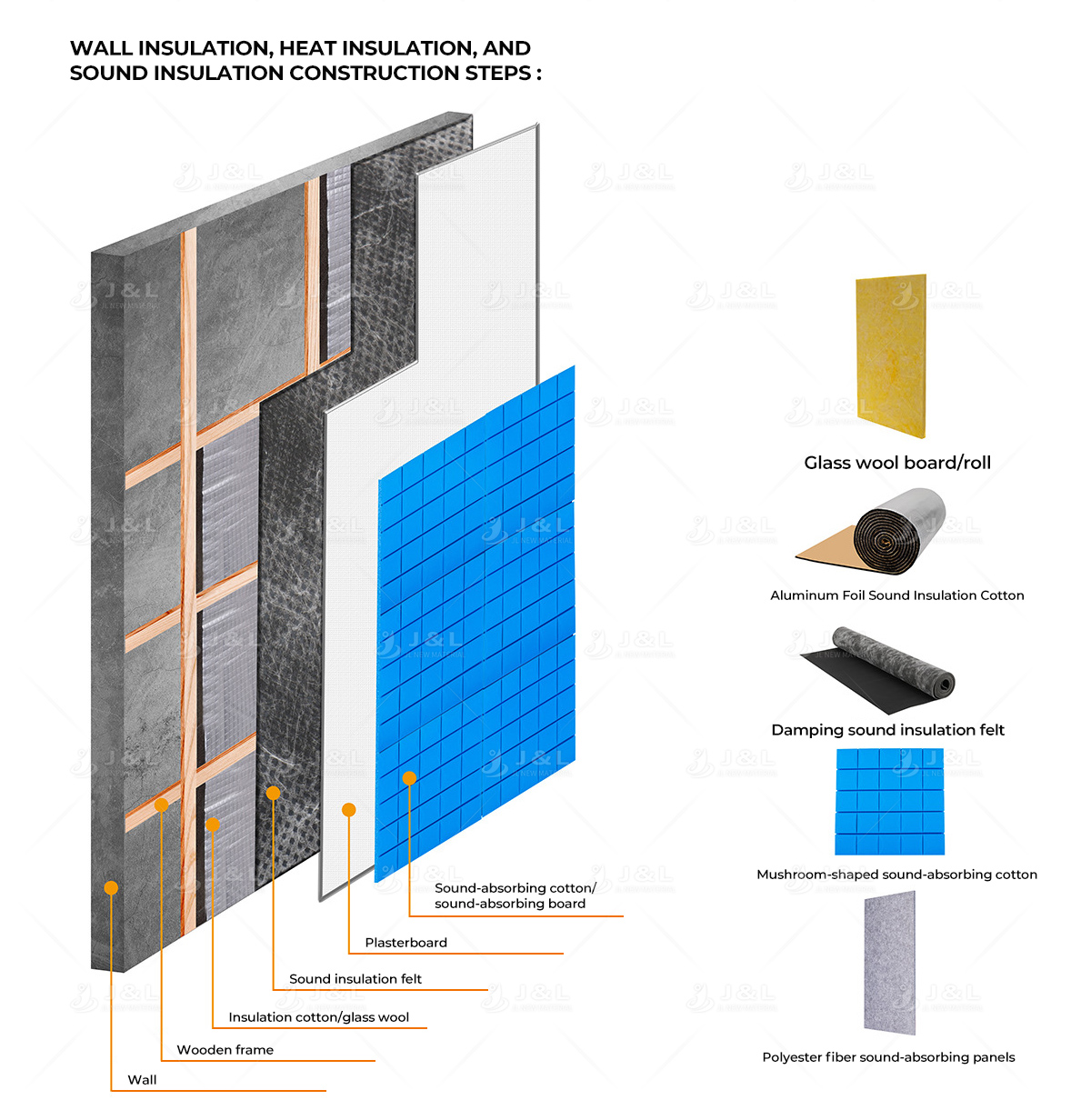
Floor Insulation, Sound Insulation, and Vibration Damping Construction Steps:
Post time: Apr-02-2026


